


Spectral::Cup 2026 Round 2 (Codeforces Round 1100, Div. 1 + Div. 2)
33:36:31
Register now »
| # | User | Rating |
|---|---|---|
| 1 | Benq | 3792 |
| 2 | VivaciousAubergine | 3647 |
| 3 | Kevin114514 | 3611 |
| 4 | jiangly | 3583 |
| 5 | strapple | 3515 |
| 6 | tourist | 3470 |
| 7 | Radewoosh | 3415 |
| 8 | Um_nik | 3376 |
| 9 | maroonrk | 3361 |
| 10 | XVIII | 3345 |
| # | User | Contrib. |
|---|---|---|
| 1 | Qingyu | 162 |
| 2 | adamant | 148 |
| 3 | Um_nik | 146 |
| 4 | Dominater069 | 143 |
| 5 | errorgorn | 141 |
| 6 | cry | 138 |
| 7 | Proof_by_QED | 136 |
| 8 | YuukiS | 135 |
| 9 | chromate00 | 134 |
| 10 | soullless | 133 |


|
+3
IMHO Problem B to me was like you either know it or you don't. Like, I can't get a piece of paper and start working on it and finally get an answer, but 7000+ people solving it really got me questioning my existence. |

|
0
That makes sense. Thank you very much <3. |
|
0
thanks |
|
+1
as long as it's fun for me I'm ok with it :"O |
|
+1
thanks ^^ |
|
0
thank you so much <3 |
|
0
thank you for the suggestion, i will read it. |
|
0
Thanks :) |
|
0
thanks :D, keep practicing and you will reach it |
|
0
thank you |
|
0
thank you, i practice both skills |
|
0
Thank you, I'll definitely keep practicing |
|
+6
thanks, i hope so too :D |
|
0
thanks, i'll keep grinding |
|
0
thank you |
|
0
thank you, I appreciate your words. |
|
0
thank you bro, you definitely will |
|
0
thank you, you too! |
|
+4
Thank you, i will definitely keep going! |
|
+1
Thank you |
|
+1
Thanks :D |
|
0
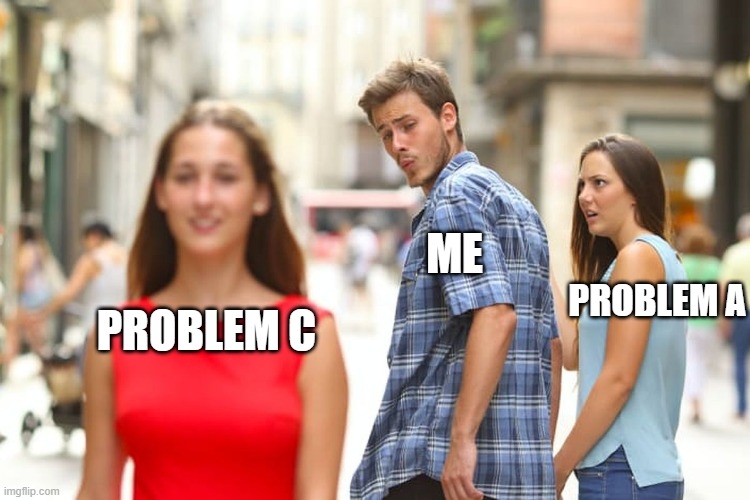
so i see that in problem B, if we replace every |
|
+26
|
|
0
the submission you mentioned looks like mine (i submitted it after the contest), and mine only passes if I use the "Ofast" optimization option. 1) don't know why the submission you mentioned is faster than mine. 2) don't know why both submissions pass. this is my code: https://mirror.codeforces.com/contest/1661/submission/153254977 probably mine is hackable. |
|
0
Can you help me with why this TLEs for problem B, I'd appreciate your help, thanks in advance. |
|
0
[edit]: understood the idea |
|
0
Thank you so much, this helps me a lot. |
|
+8
Thanks for the advice, definitely will start considering it while practicing. |
|
0
you need to know something because i knew people would get this post wrong, i am NOT against the hardwork strategy, infact i ENJOY the process and would love to keep doing it until i am a better version of myself, but the idea is for example: person "A" reached expert in 2 yrs & person "B" reached expert in 3-4 yrs so, was person "A" Smarter in the way he approaches CP ?, we all are here to learn, you learn CP because it fits your rating, i learn how to learn CP because it fits my rating. |
|
+12
no brain me solving question A by shuffling the array multiple times codeforces: we wont let u cry this time, Accepted |
|
+34
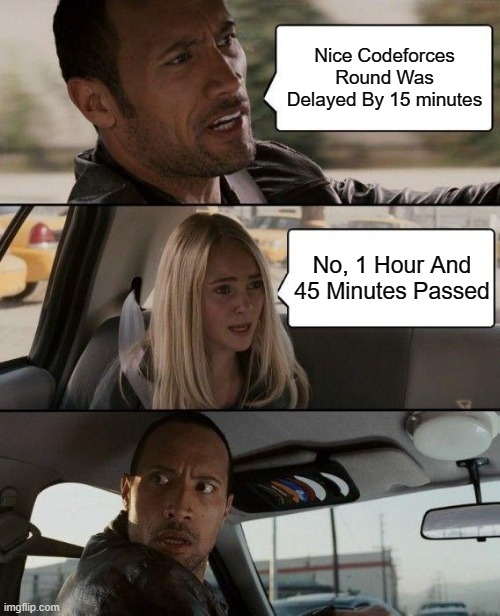
Me After Seeing The Delay:-
|
|
-6
is it delayed ? |
|
On
Endagorion →
Codeforces Round #691, based on ByteDance — Moscow Workshops Online Contest, 5 years ago
+4
I have a talent at not being able to solve questions |
|
0
i learned a lot from this round, good job! |


